How Long Roses Last in a Vase and How to Revive Them
- Author
- Марія Бржезицька
- Published
- Reading time
- 5 min read
To keep roses fresh in a vase for as long as possible, remove any leaves that would sit below the waterline, cut each stem 1–2 cm at an angle with a sharp knife, and place the bouquet in a clean vase with flower food. After that, change the water every 2–3 days, trimming the stems each time, and keep the vase away from radiators and fruit.
These tips also apply to roses in mixed bouquets, for example with white lisianthus or freesia, like the designer bouquets in Pidhorodne.
How Long Roses Last in a Vase
Fresh roses can brighten up a room for up to 10 days, and with proper care even longer, depending on the variety. According to research from North Carolina State University, a flower’s vase life depends directly on its variety and how it’s cared for. Even so, many people consider roses fussy because of a common problem called “bent neck”: the stem loses its firmness, the flower droops, and the bud never opens.
What to Do When Your Bouquet Arrives
Remove the wrapping as soon as you receive the bouquet. It’s meant only for transport and protection from the cold. If you leave the flowers wrapped, they’ll overheat and lose their freshness.
Strip all the leaves from the lower part of the stems that will be underwater. This keeps them from rotting quickly and stops bacteria from multiplying in the water.
Cut the stems 1–2 cm at an angle with a sharp knife and put them straight into water. Even a minute out of water lets air block the vessels in the stem, so the flowers absorb water poorly and wilt sooner.
Place the vase in a cool room or a spot out of direct sunlight. Keep the bouquet as far as possible from radiators, heaters, and fruit bowls. Ripening fruit gives off ethylene, which speeds up wilting considerably.
How Much Water to Use
Roses need plenty of water. The stems should be submerged about two-thirds of their length, or almost completely. Dissolve the flower food sachet in the water as directed on the packet. Flower food contains an antibacterial agent, and bacteria are the main reason roses droop. If you don’t have a sachet, change the water more often. Aspirin, sugar, and other home remedies work less well; we covered this in our article on how to keep a bouquet fresh longer.
Don’t mist the petals or put the flowers in the bathtub. Moisture on the petals makes the buds rot faster.
If the Bouquet Is Large
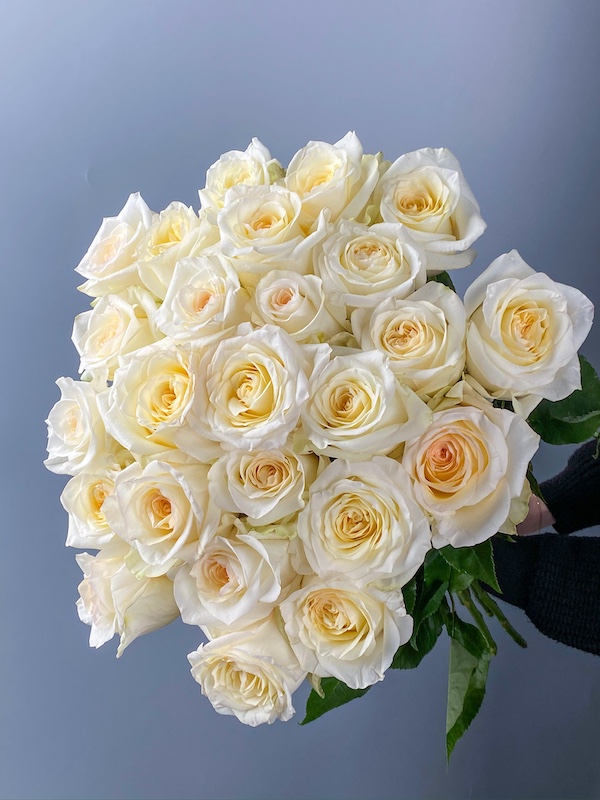
In the same North Carolina study, ten roses kept together in one vase lasted 1.4 days less than single roses and drank less water. For a 35-rose bouquet, like our single-variety bouquets in Pidhorodne, use a wide vase so the flowers aren’t crowded, and top up the water every day.
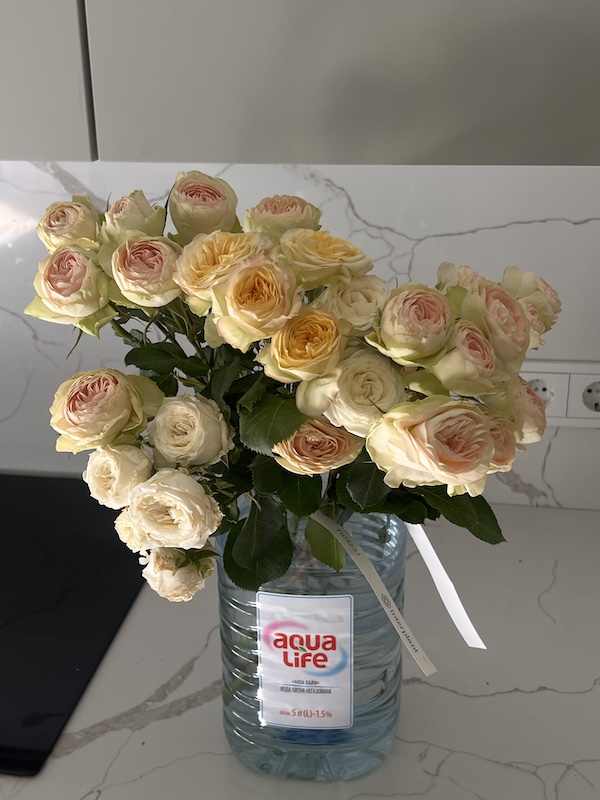
If you don’t have a vase wide enough for a lush bouquet, take a large water bottle and carefully cut off the top to make a roomy vase. Or, if you don’t mind taking the bouquet apart, simply split it between two vases.
Why Roses Droop in a Vase
Drooping rose buds mean the stem’s vessels are blocked by air or bacteria. Research confirms how much clean water matters: with regular water changes, roses stay fresh for up to a week, while in stale water a bouquet dies within three days.
How to Revive a Drooping Rose
Take the drooping roses out of the bouquet.
Wrap the flower heads tightly in paper or film to protect them from steam.
Refresh the cut: holding the stem underwater, cut off about 2.5 cm to keep air out of the vessels.
Pour a small amount of hot water (about 90 °C) into a container, just enough to cover the bottom 2–3 cm of the stems. Leave them for about 5 minutes.
Take the flowers out and trim the stem ends back to the healthy green part.
Immediately place the roses in a container of very cold water, with the stems submerged two-thirds of their length or almost completely.
Let the flowers drink for about 3 hours, then remove the wrapping.
This temperature shock helps open the vessels, push out air blockages, and restore the buds’ firmness. And if you end up with an even number of flowers in the vase and you follow the superstition, simply remove one more. We explained why in our article on how many flowers to give.
Why Petals Turn Dark
Brown spots on the petals, followed by a gray fuzzy coating, are signs of gray mold. Pull off the affected petals, and if the mold has covered the whole flower, remove it from the bouquet.
This fungal disease usually develops because of high humidity, flowers packed too tightly, or water getting on the buds.
Which Roses Last Longest
Fresh flowers with firm, tight buds last the longest. Look at the outermost petals, known as guard petals. They’re usually slightly tougher and darker or greener than the rest, depending on the variety and color.
Ecuadorian roses are generally less demanding and are rightly considered among the most long-lasting. Thanks to the high-altitude climate, they have thick, sturdy stems and large buds, and with proper care they can stay fresh for 2–3 weeks. Because of their thick stems, though, they need more water and more frequent recutting.